
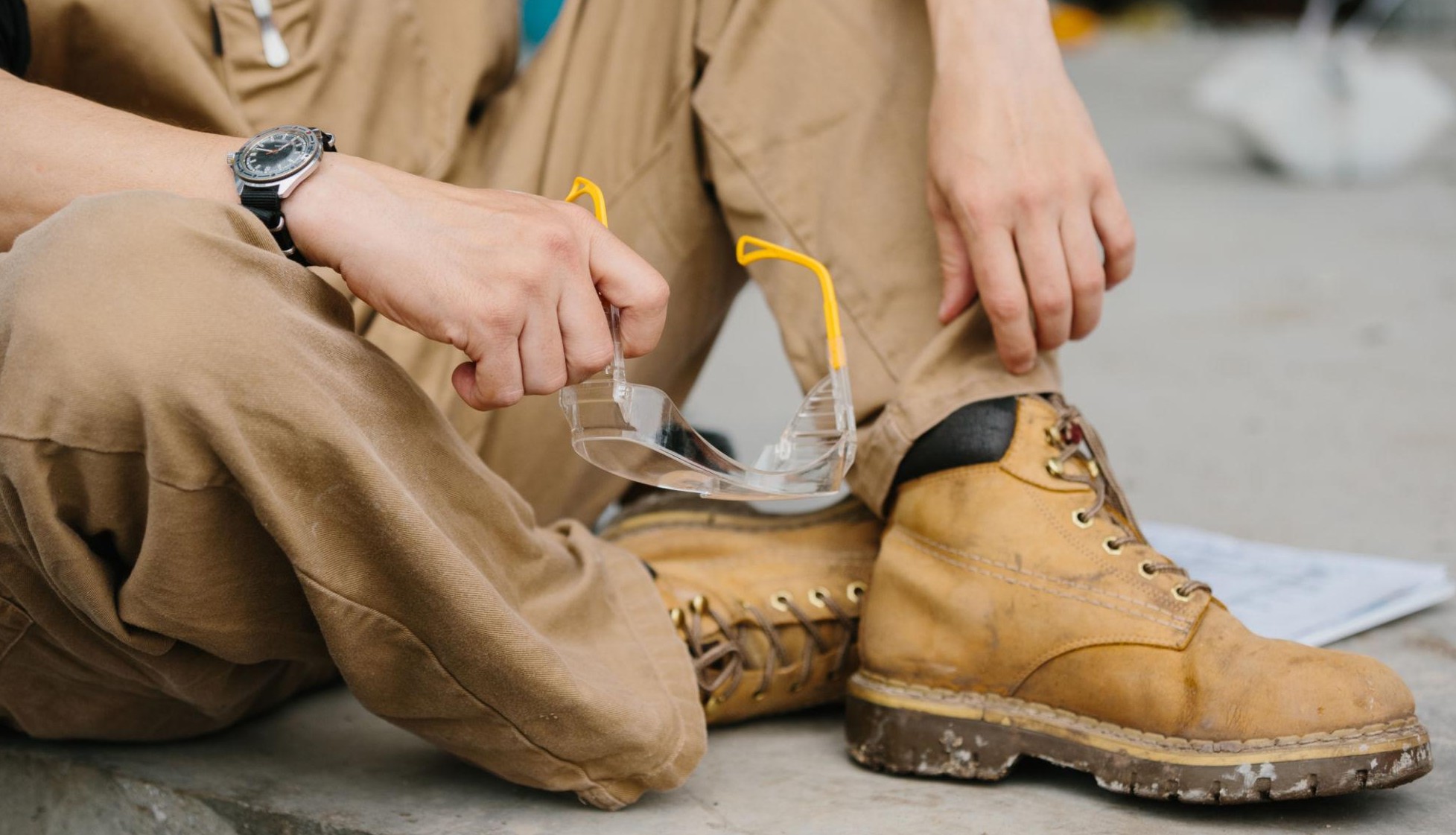
Across most industrial facilities, one story repeats itself with different protagonists: a newly hired worker or fresh-graduate engineer joins their first plant, wears the helmet, goggles, gloves, and safety boots with near-military discipline, reads the safety instructions carefully, and asks about every step that might involve risk. Months pass, skills turn into habit, and the same person starts removing the helmet “just for five minutes,” approaching a machine without goggles because they “know its motion,” or skipping insulating gloves because they’ve “gotten used to this kind of work for years.” This journey from discipline to laxity is not an individual exception — it is a well-studied behavioral phenomenon in occupational safety science, and it carries serious, tangible consequences across Egypt’s industrial landscape.
This report examines the phenomenon from two angles: the psychological and behavioral angle that explains how experience can shift from a protective factor into a risk factor, and the practical angle that tracks how this pattern shows up across different branches of Egyptian industry.
Stage One: The Enthusiasm of Beginnings
In the first weeks and months on the job, a new employee is at peak alertness; lacking enough experience to “read” danger instinctively, they rely entirely on written rules and the training they received. This caution, however tiring it may feel at times, is statistically the safest period of a worker’s career, because the person follows every instruction literally, without filtering what feels necessary from what feels excessive.
Stage Two: Gradual Laxity and the “Normalization of Deviance”
As experience accumulates, a dangerous shift occurs in the psychological perception of risk — a pattern safety scientists describe using the concept of “Normalization of Deviance,” coined by sociologist Diane Vaughan to describe the gradual process by which individuals or organizations come to accept deviations from standards as normal. The process begins with a small deviation that causes no immediate harm — removing gloves for a few minutes, for instance — which reinforces the worker’s belief that the violation is “not really dangerous.” The deviation then repeats and escalates gradually until it becomes the new norm rather than the exception.
The deeper paradox, according to specialized studies in this field, is that the length of one’s work experience can itself become a factor that weakens safety compliance. A sense of accumulated competence breeds what is known as a “false sense of security,” where the seasoned worker believes their personal skill makes the protective equipment a beginner needs unnecessary for them. This pattern has been clearly observed in studies of high-risk professions such as aviation, where more experienced pilots were found to be more willing to fly in poor weather conditions than their less experienced peers, simply because they had repeatedly handled that risk before without incident.
This laxity does not occur in a vacuum. It is also fed by organizational factors such as productivity pressure that pushes workers to favor speed over the safe procedure, negative socialization where new employees observe senior colleagues bending the rules without consequence and imitate them, the absence of continuous field supervision from safety officers, and what might be called “survival addiction” — every time a worker bypasses a safety rule without getting hurt, it reinforces the belief in their mind that the rule was never really necessary in the first place.
The Reality of the Phenomenon in Egyptian Industry
Workplace injury data in Egypt indicate that the manufacturing sector accounts for the largest share of recorded private-sector work injuries, reaching close to 54.9% of total cases in one recent year, with falls and collisions with or exposure to objects together making up more than half of all recorded injury types. Rights-monitoring reports tracking worker safety have also documented a noticeable rise in serious industrial accidents in Egypt in recent years — from fires and boiler explosions inside factories to incidents that killed multiple workers at once in textile and spinning facilities. These accidents recur most often in aging plants whose equipment has not been modernized, or in heavily polluting industries such as cement manufacturing, where the cost of full safety compliance is high, pushing some facilities — particularly those that do not export and are not bound by international standards — to cut corners on enforcement.
At the institutional level, field studies conducted on workers in Egyptian industrial facilities show that the largest share of recorded administrative risks stemmed from insufficient supervision, while the largest share of engineering risks stemmed from a lack of routine maintenance — factors that intersect directly with the experience-driven laxity described above. When field supervision is absent, the decision to wear or skip protective equipment becomes a purely individual judgment call, shaped by the worker’s personal sense of safety rather than by the facility’s actual procedures.
How the Phenomenon Shows Up Across Industrial Branches
Heavy, Chemical, and Cement Industries
In these industries, where workers deal daily with dust, fumes, and high temperatures, wearing respirators and protective goggles becomes a recurring physical burden that leads many veteran workers to believe their bodies have “adapted” to these conditions — overlooking the fact that cumulative damage, such as chronic respiratory disease, often shows no symptoms until years of repeated exposure have passed.
Spinning and Textile Manufacturing
Recurring accidents in this sector, particularly in older facilities staffed by large numbers of long-tenured workers, reveal a familiar pattern: aging boilers and machinery that have never been upgraded, paired with veteran workers who handle them based on personal experience rather than scheduled maintenance and inspection protocols — until a serious incident exposes the real gap between “accumulated experience” and “actual protection.”
Food Processing and Packaging
Here a slightly different pattern emerges: hand and finger injuries recur because gloves or machine guards around fast-moving equipment are skipped, since a worker who has run the same line for years develops excessive confidence in the timing of their own movements — confidence that a single moment of inattention is enough to consume.
Construction
This sector records some of the highest rates of fatalities and serious injuries in Egypt, given the nature of work on shifting, unstable sites. Skilled workers — whose experience has trained them to “read” the stability of scaffolding or elevated surfaces — tend to forgo safety harnesses or hard hats on tasks they consider “routine,” which are precisely the tasks where most fall accidents occur.
Oil, Gas, and Quarrying
These industries demand the highest standards of personal protection given the compounded nature of their hazards — explosions, toxic gases, heavy machinery. Yet work environments in this sector still show the same global pattern documented in research: it is often the most experienced workers who push to shorten the time spent in full protective gear during fast-paced tasks, relying on their own sense of control over the situation.
Why This Cycle Is Hard to Break
The specialized literature on occupational safety agrees that countering this phenomenon cannot be achieved simply by issuing new instructions or tightening penalties. It requires a multi-layered intervention that includes:
- Leading by example: when engineers and supervisors themselves wear protective equipment at all times without exception, it becomes much harder for a worker to justify their own shortcuts.
- Near-miss reviews: treating every “close call” as a genuine warning worth investigating, not a passing incident worth forgetting.
- A Just Culture of accountability: encouraging workers to report hazards they notice without fear of punishment, breaking the silence that allows laxity to grow unchecked.
- Recurring refresher training: scheduling reminder sessions for veteran workers just as much as for new hires, since the real gap is behavioral, not informational.
- Continuous field supervision: having safety officers physically present on the factory floor, not in offices, to catch small deviations before they harden into a new norm.
Conclusion
The gap between the initial enthusiasm for wearing personal protective equipment and the later laxity that workers justify through their own accumulated experience is not an individual moral failing — it is the natural result of a well-documented human tendency, one that interacts in Egyptian industry with aggravating factors rooted in the facilities themselves: weak field supervision, aging equipment, productivity pressure, and a lack of consistent accountability. Given that recorded workplace accident figures in Egypt’s industrial sector remain notably high, countering the “experience illusion” — the belief that personal skill exempts a worker from protective tools — requires genuine institutional investment in supervision, ongoing training, and a culture of safety, far more than it requires simply providing the equipment itself.
This report combines scientific literature on the concept of “Normalization of Deviance” in occupational safety with published data and reports on the realities of workplace accidents in Egyptian industry.

Toka Elgarhy
All Author Posts

Experience doesn’t eliminate risk. PPE remains a necessity, not an option.