
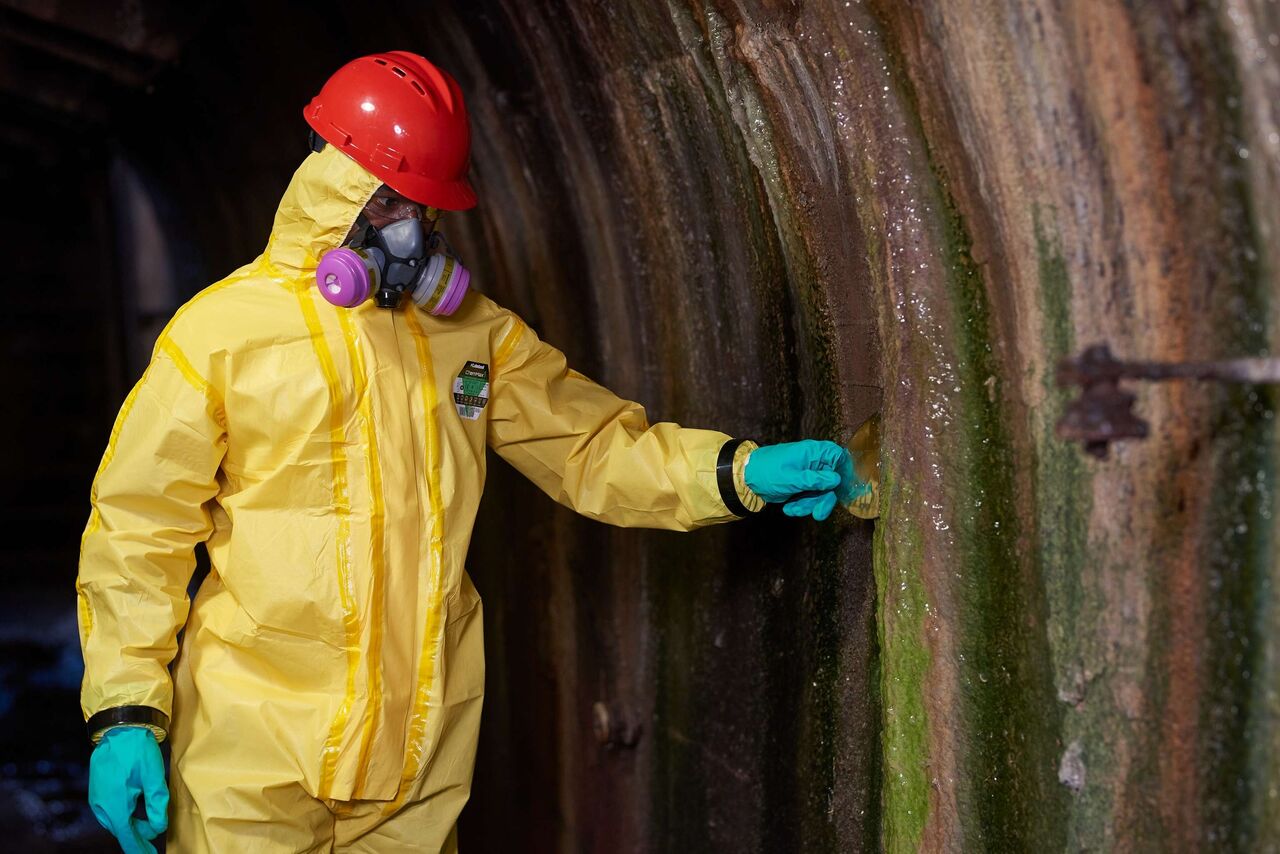
Respiratory protective devices (respirators) fall into two main categories based on facial coverage:
- Half Face Respirator: Covers the nose, mouth, and chin only; does not protect the eyes.
- Full Face Respirator: Covers the entire face, including the eyes, providing additional protection against irritant gases and splashes.
Both types work on the same principle of removable, replaceable filters/cartridges. The main difference between them is the area of facial coverage, not the filter type itself. The filter or cartridge is selected based on the contaminant present in the work environment (dust, organic vapors, acid gases, ammonia, etc.), regardless of whether the mask is half face or full face — provided the connector (bayonet/thread) is compatible.
First : Types of Filters and Cartridges
1- Particulate Filters
These work by mechanical filtration to capture solid and liquid particles suspended in the air, such as dust, fumes, mist, and microorganisms. They provide no protection whatsoever against gases or chemical vapors.
2- Gas / Vapor Cartridges
These contain activated carbon (sometimes with added chemical impregnations) that chemically adsorbs gas or vapor molecules. Each type is designed for a specific family of chemicals (organic, acidic, ammonia, etc.) and provides no protection against solid particles.
3- Combined Filters
These combine a particulate filtration layer with a chemical adsorption layer for gases in a single cartridge. They are used when both hazards (gases + particles) are present simultaneously, such as during spray painting operations.
Second : Particulate Filter Classification and Meaning
| Class (EN 143) | Filtration Efficiency | US Equivalent (NIOSH) | Typical Use |
| P1 | ≥ 80% | N95 (approx.) | Wood dust, non-toxic dust |
| P2 | ≥ 94% | N95 / N99 | Metal dust, mist, some solid fumes |
| P3 | ≥ 99.95% | N100 / P100 | Highly toxic particles, asbestos, fine chemical mist |
The standard color for particulate filters (per EN 14387) is white; an additional color is added when combined with a gas filter (combined filter).
Third : Gas & Vapor Filter Classification and Meaning
| Code | Standard Color | Type of Protection / Target Gases |
| A | Brown | Organic gases and vapors (boiling point above 65°C) — solvents, paints, benzene |
| B | Grey | Inorganic gases and vapors — chlorine, hydrogen cyanide, hydrogen sulfide |
| E | Yellow | Acid gases — sulfur dioxide, hydrochloric acid |
| K | Green | Ammonia and its organic derivatives (amines) |
| AX | Brown (striped) | Low-boiling organic vapors (below 65°C) — for short-term use only |
| Hg | Red/Orange | Mercury vapor (typically used with P3, for a limited time only) |
| CO | — | Carbon monoxide — a very specialized filter, uncommon, and limited in use |
| NO | Light Blue | Nitrogen oxides |
| P | White | Solid/liquid particles (combined with any of the above codes to form a combined filter) |
A combined filter such as ABEK-P3 provides comprehensive protection against the four main gas types (A+B+E+K) plus the highest particulate filtration efficiency (P3), and is typically used in industrial environments where the hazard type is unspecified or high-risk.
Fourth : Capacity Classes (Class 1, 2, 3) and Meaning
Each gas code (A, B, E, K…) has three capacity classes. The difference between them is the duration of protection (breakthrough time), not the type of protection:
| Class | Capacity | Typical Use |
| Class 1 | Low capacity | Low contaminant concentrations, lower breathing resistance (more comfortable) |
| Class 2 | Medium capacity | The most common general industrial use |
| Class 3 | High capacity | High concentrations or long exposure periods, higher breathing resistance |
Note: Increasing the class (from 1 to 3) does not mean “stronger” protection against a different type of gas — it means greater adsorption capacity for the same gas type, i.e., a longer usable duration before saturation.
Fifth : Other Technical Specifications and Their Meaning
- Filtration Efficiency (%): The percentage of particles the filter stops out of the total particles in the tested air.
- Breathing Resistance / Pressure Drop: Resistance to airflow through the filter during inhalation and exhalation; higher efficiency or capacity class generally increases resistance, reducing breathing comfort.
- Breakthrough Time: The time it takes for a gas to reach a specified concentration behind the filter, used to determine the cartridge’s usable service life.
- Connection Type: Either a manufacturer-specific bayonet fitting, or a standard 40mm thread per EN 148-1, which allows filters from different brands to be used on the same mask.
- ESLI (End of Service Life Indicator): Some advanced cartridges (especially for specific gases like formaldehyde) include a color indicator that changes as saturation approaches.
- Shelf Life: The lifespan of an unused, sealed filter (typically 3–5 years), distinct from the actual in-use service life after opening.
- Weight and Mask Size: Affect comfort during extended use, particularly with full face respirators.
Important Notes and Warnings
- Never use any particulate or chemical filter in oxygen-deficient environments (below 19.5%); a self-contained breathing apparatus (SCBA) must be used instead.
- A particulate filter alone does not protect against gases, and a gas filter alone does not protect against particles; a combined filter must be selected when both hazards are present together.
- Always match the filter’s code and class to the actual contaminant listed in the Safety Data Sheet (SDS/MSDS) for the chemical in use.
- A filter with an EN 148-1 thread connector cannot be fitted to a bayonet-connector mask, or vice versa; verify connector compatibility before purchase.
- Replace the filter immediately if you smell or taste the contaminant, experience difficulty breathing, or when the manufacturer’s recommended service life is reached — whichever comes first.

Toka Elgarhy
All Author Posts
