

–
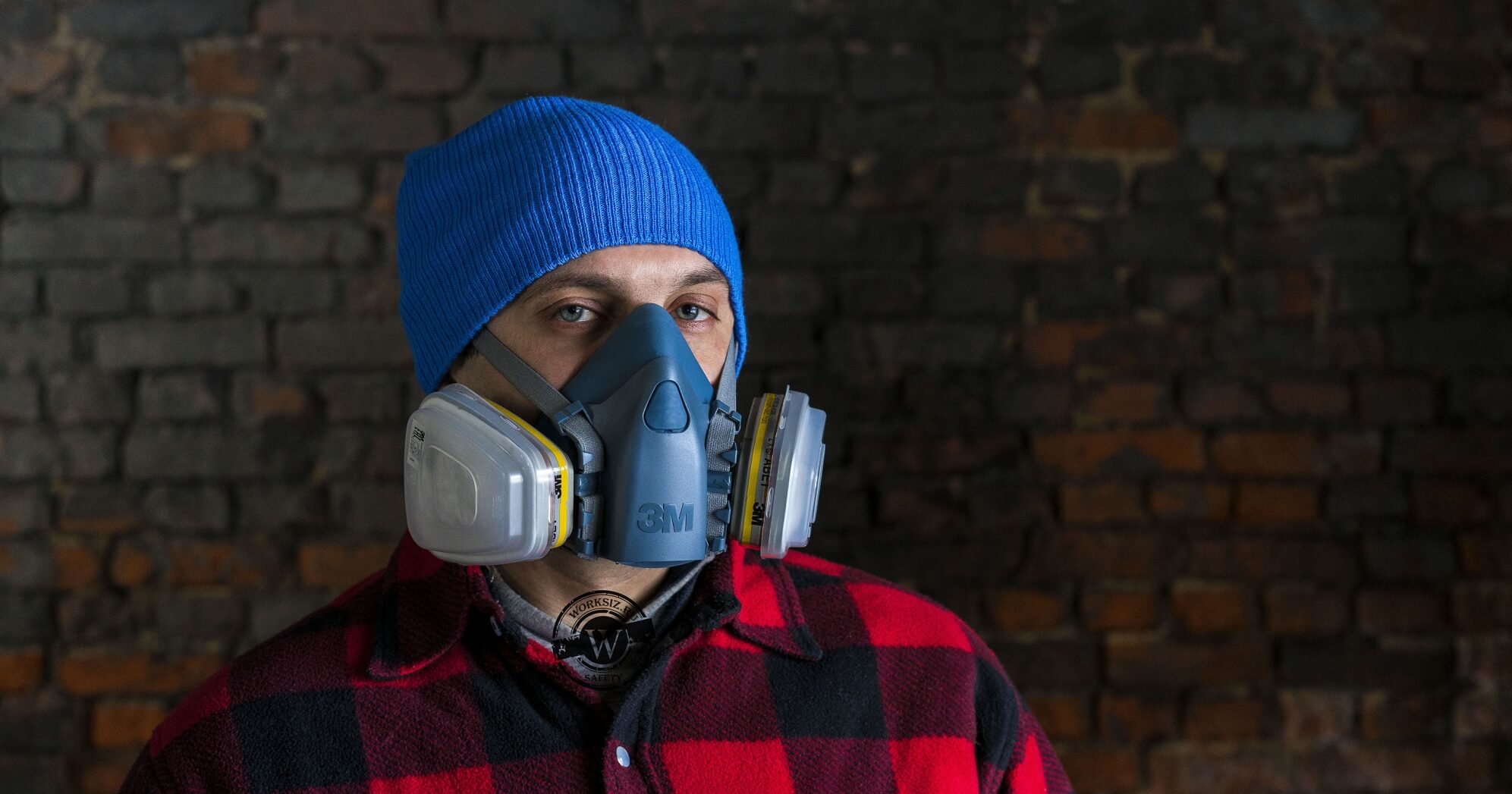
A respirator is a piece of personal protective equipment (PPE) worn to protect a worker’s respiratory system from inhaling hazardous contaminants such as dust, mists, vapors, gases, fumes, or biological aerosols. Choosing the right respirator is not an arbitrary decision — it relies on a careful assessment of the hazard, the working conditions, and the characteristics of the user, guided by regulatory frameworks such as the U.S. Occupational Safety and Health Administration (OSHA) standard and the selection logic issued by the National Institute for Occupational Safety and Health (NIOSH).
This report outlines the key factors that should be taken into account when selecting an appropriate respirator, whether in an industrial workplace or for general use.

First: Assessing the Respiratory Hazard Itself
- Type and Physical/Chemical Form of the Contaminant
The first step is to determine whether the contaminant is a solid particulate (dust, fibers), a liquid mist, a vapor, or a gas, since each form requires a different filtration technology; particulate filters do not protect against gases, and vice versa. The chemical properties of the contaminant (toxic, irritant, carcinogenic) must also be known in order to select the appropriate cartridge or filter type.
- Exposure Level and Concentration
Because exposure to a contaminant can vary throughout a work shift, the highest anticipated concentration should be used when calculating the required level of protection. This is expressed through the Assigned Protection Factor (APF), which represents the level of protection a given respirator is expected to provide when used within an effective respiratory protection program; for example, a half-mask respirator with cartridges and filters provides an APF of about 10, while some full-facepiece or supplied-air respirators can offer much higher protection factors.
- Work Environment and Surrounding Conditions
Consideration should be given to whether the environment poses an Immediately Dangerous to Life or Health (IDLH) condition, as well as temperature, humidity, and how long the worker will remain in the contaminated environment during a shift, since these factors affect which respirator type is suitable and how well the worker can tolerate it.
Second: Compliance with Approved Standards
- Official Certification (NIOSH Approval or Equivalent)
No respirator may be used in a regulated workplace unless it is certified by a recognized authority such as NIOSH in the United States, or an equivalent standard elsewhere (such as EN 149 in Europe). The respirator must be used within the limitations stated on its certification label.
- Appropriate Filter Class
For particulate filters, there are multiple classifications based on two criteria: resistance to oil-based aerosols (N: not resistant, R: somewhat resistant, P: strongly resistant to oil) and filtration efficiency (95%, 99%, or 99.97% as in the P100 class). The appropriate class is selected according to the nature of the contaminant present in the workplace.
Third: User-Related Factors
- Fit Testing
For tight-fitting respirators, a qualitative or quantitative fit test must be performed to confirm that the respirator forms an adequate seal on the wearer’s face, using the exact model and size that will actually be used, since any leakage around the edges significantly reduces its effectiveness.
- User’s Medical Condition
Some respirators impose additional breathing resistance on the wearer (negative-pressure respirators), which may not be suitable for individuals with medical conditions that restrict their ability to breathe freely; in such cases, a powered air-purifying respirator (PAPR) may be a better option.
- Comfort and User Preference
Comfort during prolonged wear is an important factor in ensuring proper and consistent use; for strenuous work, a lighter and more streamlined respirator is preferable. Facial shapes and sizes also vary between individuals, so it may be necessary to offer several sizes or models to choose from.
- Compatibility with Other Protective Equipment
The respirator must be compatible with other PPE worn by the user, such as safety glasses, hard hats, and hearing protection; these items may compete for the same space on the face (such as the bridge of the nose), which can cause leakage around the respirator seal or loss of eye protection.
- Functional Limitations During Use
The respirator should not impair the user’s vision, hearing, ability to communicate verbally, or the physical movement needed to perform the job safely; for example, airline (hose-supplied) respirators should not be used by mobile workers near moving machinery, to avoid the risk of entanglement.
Fourth: Operational and Administrative Factors
- Duration of Use and Maintenance
Consideration should be given to how easily the respirator can be cleaned and maintained, how easily filters or cartridges can be replaced, its expected service life, and the training the user will need to correctly fit and inspect it periodically.
- Overall Cost
Total cost includes the price of the respirator itself, plus the cost of replacement filters, periodic fit testing, training, and any medical evaluations required before use in certain situations.
Conclusion
Selecting the right respirator is a multi-dimensional process that begins with a careful assessment of the respiratory hazard and the level of exposure to it, followed by verifying that the respirator meets approved certification standards and the required protection factor, and finally accounting for the user’s personal and operational factors — comfort, fit, and compatibility with other safety equipment. Neglecting any of these factors can result in inadequate protection, even if the respirator appears “suitable” at first glance.
References
- OSHA — Respiratory Protection Standard, 29 CFR 1910.134
- OSHA eTool: Respiratory Protection – Respirator Selection
- NIOSH Respirator Selection Logic (DHHS Publication No. 2005-100)
- CDC/NIOSH — Respirator Types and Use
Air-Purifying Respirators, APF, Industrial Safety, NIOSH, Occupational Safety, OSHA, PAPR, Personal Protective Equipment, PPE, Protective Equipment, Respirator Fit Testing, Respirator Selection, Respirator Standards, Respirators, Respiratory Hazards, Respiratory Protection, Workplace Health, Workplace Safety

Toka Elgarhy
All Author Posts
%20worn%20to%20protect%20a%20worker’s%20respiratory%20system%20from%20inhaling%20hazardous%20contaminants%20such%20as%20dust,%20mists,%20vapors,%20gases,%20fumes,%20or%20biological%20aerosols.%20Choosing%20the%20right%20respirator%20is%20not%20an%20arbitrary%20decision%20—%20it%20relies%20on%20a%20careful%20assessment%20of%20the%20hazard,%20the%20working%20%5B…%5D&media=https://shop.yehiaco.com/wp-content/uploads/2026/08/3M-Versaflo-TR-300Plus-HIK-Stronger-Together-Toolkit-Application-Image-2-e1787150218900.jpg)